
I need to tell you something that most people won’t say out loud.
There’s a specific kind of heartbreak that doesn’t announce itself with dramatic fights or explosive betrayals. It arrives quietly, in the accumulation of small moments that don’t quite add up. The sex that suddenly feels mechanical. The conversations that never go deeper than surface logistics. The way their eyes glaze over when you talk about something that matters to you.
You were being used.
And the realization doesn’t hit you all at once. It builds. It compounds. Until one day you’re standing in your kitchen or sitting in your car, and the entire architecture of what you thought you had collapses into a single, devastating truth: you were never the relationship. You were the resource.
The Difference Between Being Loved and Being Useful
Here’s what I’ve learned from working with people navigating this specific devastation: betrayal trauma is incredibly different and more damaging than other types of relationship pain. It’s not just heartbreak. It’s a fundamental rupture in your ability to trust your own perception.
Because when someone uses you, they don’t show up wearing a sign. They show up looking like love.
They show up with enough attention to keep you invested. Enough intimacy to make you believe you’re building something real. Enough presence to convince you that what you’re experiencing is connection.
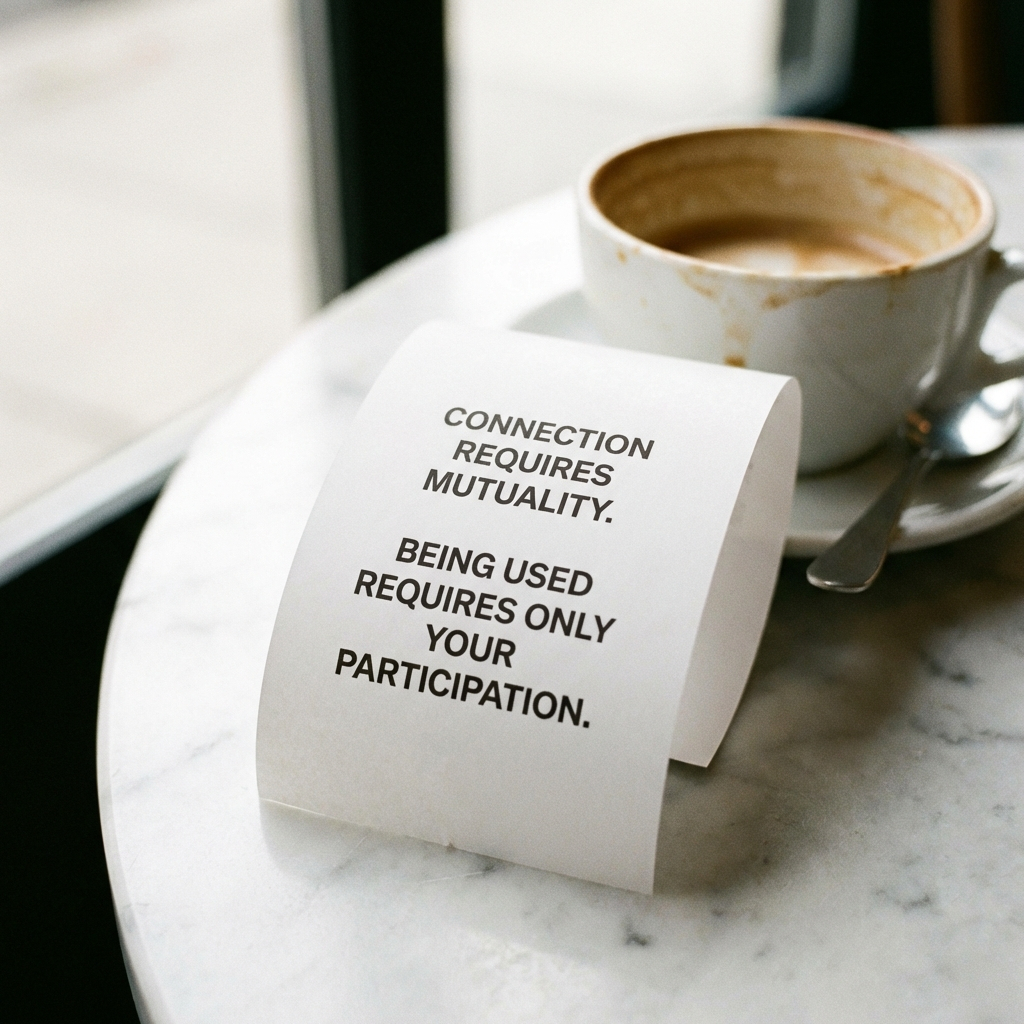
But connection requires mutuality. Being used requires only your participation.
The person using you doesn’t need to feel what you feel. They just need you to keep feeling it long enough to serve their purpose. Emotional availability. Physical intimacy. Financial support. Social validation. A place to stay. An audience for their problems. A buffer against their loneliness.
Whatever they needed, you provided. And you provided it believing you were building a relationship.
You weren’t.
The Signals You Talked Yourself Out of Seeing
I’m not going to tell you that you missed red flags. You didn’t miss them. You saw them. You felt them. Your nervous system registered every single inconsistency.
But you did what most people do when they’re emotionally invested: you explained them away.
The intimacy that only happened on their terms became “they’re just not as affectionate as I am.” The conversations that never included your emotional reality became “they’re not good at talking about feelings.” The plans that only materialized when it was convenient for them became “they’re just really busy right now.”
You built a story that allowed the relationship to continue. Because the alternative was too destabilizing to accept.
But your body knew. The tightness in your chest when they canceled plans again. The sinking feeling when they responded to your vulnerability with indifference. The exhaustion that came from constantly adjusting your needs to fit their availability.
Those weren’t anxiety symptoms. Those were recognition signals.
Your system was telling you: this person is not meeting you. They’re extracting from you.
What Being Used Actually Takes From You
The loss isn’t just the relationship. The loss is you.
Research on betrayal trauma confirms something I see in every person who’s been through this: the loss of self is buried in shame. It includes the loss of innocence and identity. The loss of role and reputation. The loss of being seen and heard.
When you realize you were being used, you don’t just lose the person. You lose the version of yourself who trusted that what you were experiencing was real.
You lose your confidence in your own judgment. You start questioning every moment. Was any of it real? Did they ever actually care? How did I not see this sooner? What’s wrong with me that I stayed?
And here’s the part that makes this type of heartbreak so structurally different from others: you’re not just grieving what you lost. You’re grieving what never existed.
The future you imagined. The partnership you thought you were building. The person you believed they were. None of it was real. You were in a relationship with a projection while they were in a transaction with your resources.
The Compounding Damage You Don’t Expect
Being used doesn’t just hurt in the moment. It changes how you show up in every relationship after.
Studies show that self-esteem affects attachment style and predicts whether future relationships will survive. When you enter a relationship with lower self-esteem, your happiness declines faster. The steepest decline happens for people whose self-esteem was already compromised.
This is why being used has compounding effects. It doesn’t just damage your current sense of self. It sets up a pattern where future relationships become harder to navigate because you’re operating from a destabilized foundation.
You become hypervigilant. You scan every interaction for signs of exploitation. You hold back parts of yourself because giving fully once already destroyed you. You test people in ways they don’t understand because you’re trying to avoid being blindsided again.
And the cruel part? The person who used you moves on without carrying any of this weight. They don’t lose sleep wondering if they can trust again. They don’t question their judgment. They don’t rebuild their entire relational framework from the ground up.
They just find someone else to use.
What You’re Actually Recovering From
I need you to understand something that most people won’t name clearly: you’re not recovering from a breakup. You’re recovering from exploitation.
The framework that actually fits what you experienced is trauma. Not the kind that comes from a single catastrophic event, but the kind that accumulates through sustained relational violation.
When someone uses you, they don’t just take what they need and leave. They condition you to accept less while believing you’re receiving more. They train you to override your instincts. They teach you that your needs are negotiable while theirs are fixed.
This is why you can’t just “get over it.” This is why time alone doesn’t resolve it. This is why you find yourself stuck in loops of anger, confusion, and self-blame months or even years later.
You’re not being dramatic. You’re not overreacting. You’re dealing with the aftermath of having your reality systematically distorted while your emotional resources were being extracted.
Recovery from this requires more than processing feelings. It requires rebuilding your ability to trust what you know. It requires learning to recognize exploitation patterns before you’re emotionally invested. It requires constructing boundaries that aren’t negotiable.
It requires you to stop waiting for the person who used you to validate that what happened was real.
The Truth You Need More Than Comfort
Here’s what I tell people who are navigating this specific devastation: the person who used you is not going to give you closure. They’re not going to admit what they did. They’re not going to apologize in a way that makes sense of your pain.
Because to admit they used you, they’d have to acknowledge that they saw you as a resource rather than a person. And most people who operate this way have convinced themselves they didn’t.
They’ll rewrite the story. They’ll tell themselves and others that the relationship just didn’t work out. That you were incompatible. That you wanted different things. They’ll frame it as a mutual ending to something that was mutual for you but transactional for them.
And you’ll be left holding the full weight of what actually happened while they move forward unburdened.
This is the reality. Not because I want to make it harder, but because clarity is more useful than comfort right now.
You don’t need someone to soften this. You need someone to confirm that what you experienced was real, that the damage is legitimate, and that rebuilding from here is possible but requires you to stop negotiating with your own clarity.
You know what happened. Your body knows. Your instincts know. The part of you that kept adjusting and accommodating and explaining away the inconsistencies knows.
The work now is learning to trust that knowing more than you trust the story someone else told you about who they were.
What Comes Next
Recovery from being used doesn’t look like returning to who you were before. That version of you didn’t have the pattern recognition you have now. That version of you didn’t know what exploitation looks like when it’s wrapped in intimacy.
You’re not going backward. You’re building something entirely different.
You’re learning to read relational systems the way some people read code. You’re developing the ability to spot extraction patterns before you’re emotionally entangled. You’re constructing boundaries that function as architecture rather than suggestions.
This doesn’t mean you become closed off. It means you become precise.
You stop giving people credit for potential. You stop interpreting inconsistency as complexity. You stop waiting for someone to choose you when their actions already told you they won’t.
You learn to recognize the difference between someone who’s building with you and someone who’s borrowing from you until something better comes along.
And most importantly, you stop treating your clarity like it needs external validation.
The heartbreak of realizing you were used is devastating because it forces you to see how much you compromised your own knowing to maintain a connection that was only serving one person.
But that same devastation is also the entry point to something most people never access: the ability to trust yourself more than you trust someone else’s performance of care.
You’re not broken. You’re recalibrating. And the person you’re becoming doesn’t negotiate with dysfunction anymore.
She just builds better walls.
Discover more from Healing but Dealing
Subscribe to get the latest posts sent to your email.
