
I need to tell you something most therapists won’t say out loud.
You know the feeling you’re calling love?
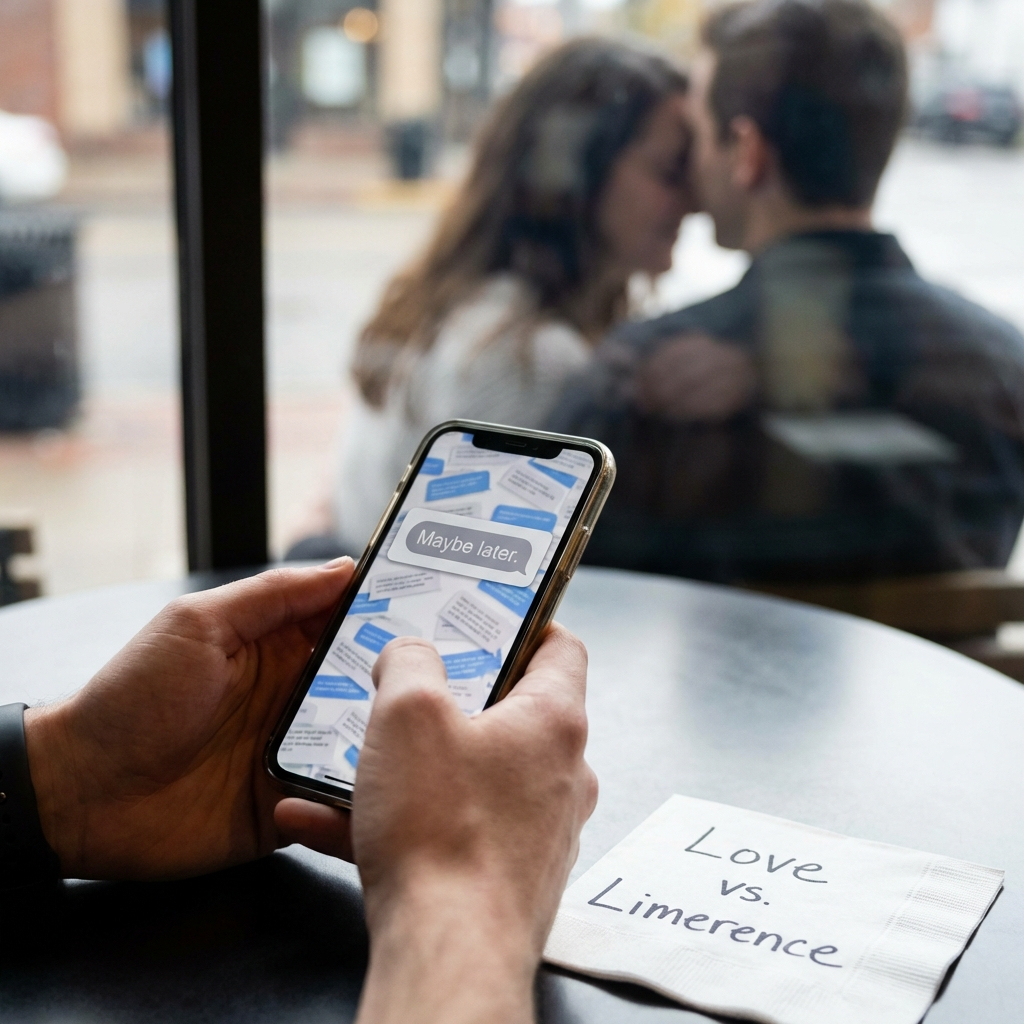
The one hijacking your thoughts at 2 AM. Keeping you analyzing three-word text messages for hidden meaning. Making your chest physically ache when they go silent for a day.
That’s not love.
That’s limerence.
And if you’ve survived a toxic relationship or wrestled with codependency, you need to understand the difference before you lose another year of your life to someone who barely texts back.
Most People Have Never Heard This Word
Here’s what makes this dangerous.
Most clinicians have never even heard the term limerence, much less treated the condition.
You sit in therapy for months describing the symptoms.
The obsessive thoughts. The emotional dependency. The fantasy-building.
And never get the structural diagnosis you need.
So you stay stuck.
You keep thinking something’s wrong with you. You wonder why you don’t get over someone who barely knows you exist.
The pattern stays invisible because no one taught you to recognize what you’re looking at.
Not Everyone Gets Trapped This Way
Limerence isn’t universal.
You’re looking at a vulnerability signature.
Research shows only about 50% of women and 35% of men experience limerence.
For those who do? 32% found the condition so distressing they struggled to enjoy life. We’re talking about real suffering here.
This matters because limerence reveals something about your internal architecture.
Not your feelings about another person.
If you’re susceptible to limerence, you’re wired for a specific kind of attachment pattern.
One emotionally manipulative people read like a manual.
The Foundation: Low Self-Esteem and Anxious Attachment
Here’s the structural reality: low self-esteem directly correlates with two core aspects of limerence: anxiety and emotional dependency.
The mechanism is straightforward. And brutal.
If you internalized the message you’re unworthy of having your needs met, limerence becomes your validation system.
You don’t seek connection.
You seek proof you matter.
And you’ll chase this proof through fantasy, obsession, and emotional gymnastics exhausting to anyone watching from the outside.
This is codependency mechanics in action.
You’re not in love with a person. You’re in love with the idea their attention will finally make you whole.
What Fuels Limerence
Love needs connection to survive.
Limerence needs the opposite.
Uncertainty is the operational fuel.
Psychologist Dorothy Tennov, who coined the term, found limerence requires ambiguity to intensify.
The primary driving force isn’t attraction or compatibility. The driving force is uncertainty surrounding whether the other person reciprocates your feelings.
Translation: clarity kills limerence.
The thing you’re calling love only survives when you don’t know where you stand.
The moment you get a definitive answer, either outright rejection or full commitment, the obsession starts to fade.
This is why limerence feels so intense with emotionally unavailable people. They provide the ambiguity the pattern needs to thrive.
The Toxic Pattern Connection
If you’ve been love-bombed in a toxic relationship, you already know this dynamic. You’ve lived this.
Limerence is the force animating toxic relationships in their early days.
The manipulative partner supplies uncertainty through hot-and-cold behavior, intermittent reinforcement, and enough attention to keep you hooked.
You supply the obsessive thoughts. The unbridled passion. The addictive need for reciprocation.
A biochemically perfect trap.
During the love bombing phase, your limerence intensifies because this person gives you enough certainty to feel hope. Then withdraws enough to trigger panic.
You’re not building a relationship. You’re feeding an addiction cycle.
Your Brain on Limerence
People in healthy love spend about 65% of their waking hours thinking about their partner. Already a lot.
People in limerence? They hit 85 to nearly 100% of their days and nights lost in obsessive fantasy.
This isn’t poetic.
You’re looking at cognitive hijacking.
When you’re separated from the person you’re limerent for, you experience withdrawal symptoms.
Chest pain. Sleep disturbance. Irritability. Depression.
The compulsive behavior mirrors substance use disorder.
Your brain isn’t processing a relationship.
The brain is processing an addiction.
And like any addiction, the high requires increasing doses of uncertainty, fantasy, and hope to maintain the same emotional intensity.
Limerence Is Codependency in Fantasy Form
Here’s what limerence is.
Emotional hostage-taking dressed up as devotion.
You build a fantasy version of someone in your head. Then you try to control them into matching this projection.
When they don’t, you blame them for not being what you imagined instead of accepting who they are.
This is the opposite of boundaries.
Boundaries require you to see people clearly and respond to reality.
Limerence requires you to ignore reality and cling to fantasy.
You’re not loving someone. You’re demanding they become your emotional solution.
The Anxious Attachment Amplifier
If you have anxious attachment, limerence doesn’t happen.
The condition detonates.
You already feel panic when sensing rejection. Limerence amplifies this panic into full physiological crisis.
When your limerent object goes cold, you experience immediate panic symptoms and all the slow-burn insecurities about abandonment you’ve carried since childhood.
The pattern replicates your earliest wounds. Unreliable caregivers taught you love requires constant vigilance. An avoidant limerent object feels familiar at some level, even as the dynamic destroys you.
You’re not choosing dysfunction. You’re responding to what your nervous system learned to recognize as normal.
How Limerence Ends
Limerence always fades.
The question is how long you’ll let the pattern run.
The typical timeline is six months to two years, but only if uncertainty gets resolved.
If the person reciprocates fully or rejects you outright, limerence ends.
Staying in limbo prolongs the obsession indefinitely.
This is why breadcrumbing works so well.
Enough contact to prevent closure. Enough distance to maintain uncertainty.
The exit requires confrontation.
Not with them. With yourself.
You have to choose certainty over hope. You have to decide clarity matters more than the fantasy. You have to stop waiting for them to give permission to move on.
Love Builds. Limerence Suspends.
Here’s the structural difference you need to recognize:
Love stabilizes over time.
Love builds architecture. Trust, shared experience, mutual investment. Love moves forward.
Limerence suspends you in place.
Limerence keeps you locked in emotional anticipation, intrusive thoughts, and dependency on perceived signs of reciprocation.
Love creates conditions for growth. Limerence creates conditions for obsession.
One builds a foundation. The other builds a prison.
What This Means for You
If you recognize yourself in this pattern, you’re not broken.
You’re operating from a specific internal architecture making you vulnerable to limerence.
The work isn’t about finding the right person who won’t trigger this pattern.
The work is about rebuilding your foundation so uncertainty doesn’t feel like oxygen.
You need to:
-
Recognize the pattern when the whole thing starts instead of romanticizing the intensity
-
Choose certainty over hope even when hope feels more compelling
-
Build self-worth independent of external validation so you feel stable
-
Develop anxious attachment awareness so you interrupt the panic response before the response controls you
-
Create boundaries based on reality instead of fantasy projections
This isn’t about never feeling attraction again.
You’re learning to distinguish between connection and compulsion.
Between love and the thing masquerading as love while quietly destroying your capacity for intimacy.
The Truth You Need to Hear
Limerence feels like the most important thing happening to you.
The feeling is wrong. Completely wrong.
Limerence is a distraction from the real work.
Building a self not needing someone else’s uncertainty to feel alive.
The person you’re obsessing over isn’t your soulmate.
They’re a mirror reflecting back the validation you haven’t learned to give yourself.
Stop waiting for them to choose you.
Start choosing clarity over chaos. Start choosing yourself over the fantasy.
Start building the architecture that makes limerence impossible because you’re no longer willing to suspend your life for someone else’s ambiguity.
That’s not healing and waiting. That’s healing and dealing.
And the work starts the moment you stop negotiating with your own clarity.
Discover more from Healing but Dealing
Subscribe to get the latest posts sent to your email.
