
Spend five minutes on relationship TikTok and you’ll hear the same advice about Dismissive Avoidants: run.
The narrative is consistent. Cold. Emotionally unavailable. Fundamentally broken. Incapable of real intimacy.
I’ve watched this story calcify into gospel, and I’ve watched people lose relationships they wanted because they believed it.
Here’s what I know from working with people navigating these exact dynamics: attachment style isn’t destiny. The real question isn’t whether someone has a Dismissive Avoidant pattern. The real question is whether they’re willing to do the work.
And whether you’re willing to stop operating from covert contracts.
You know the ones. The unspoken agreements where you over-give, over-accommodate, and silently expect a specific emotional return. When it doesn’t come, you feel betrayed by terms the other person never agreed to.
What I’m about to walk you through isn’t a guide to fixing someone. It’s a framework for seeing clearly, communicating structurally, and deciding whether the relationship you’re in can move from chaos to coherence.
The 4-to-6 Month Boomerang: Why They Pull Away Right When It Gets Real
Every attachment style has a timeline.
Anxious attachment pushes for commitment in the first two months. Fearful Avoidant hits the gas between months two and four. Dismissive Avoidant operates on a completely different clock.
They don’t start considering serious commitment until the 4-to-6 month mark.
And that’s exactly when the boomerang happens.
Right as the relationship becomes real, they disappear. Not because they’re cruel. Not because they were lying about their feelings. Because their nervous system just registered threat.
This withdrawal isn’t rejection. It’s a test they don’t know they’re running.
They’re vetting for stability. They’re checking whether you can handle their need for autonomy without treating it like an emergency. They lack the tools for direct communication, so they retreat and watch what you do next.
Do you panic? Do you shame them? Do you issue ultimatums?
Or do you hold your ground without collapsing into chaos?
The entire purpose of the dating stage is to ask questions and determine whether you’re a good fit for this person and whether they’re a good fit for you. This moment is one of those questions, delivered in behavior instead of words.
The “Perfect Person” Myth: Why They’re Always Finding Flaws
I see this pattern constantly. The Dismissive Avoidant who’s perpetually searching for someone better. Someone who won’t trigger conflict. Someone who just gets it.
It looks like impossibly high standards.
It’s actually a defense mechanism.
The search for the perfect person is a way to avoid the helplessness of emotional conflict. If they can just find the right match, they believe, there will be no disagreements. No messy feelings. No vulnerability.
This is why they prioritize intellectual connection early on. Philosophies, work, ideas—these feel safe. Talking about feelings triggers a fear of being trapped or misunderstood.
The flaw-finding isn’t about you. It’s about keeping the door open for an exit they might never take.
Why a Conflict-Free Relationship Is Actually a Red Flag
We’ve been sold a lie about what healthy relationships look like.
The idea that a good marriage is one without arguments? That’s not harmony. That’s avoidance.
When a couple tells me they haven’t had a conflict in 12 years, I don’t see success. I see two people who’ve been sweeping issues under the rug until the pile became a wall.
The Power Struggle stage is mandatory.
This is the phase where the honeymoon masks drop and you start fusing your inner worlds. It’s uncomfortable. It’s supposed to be. This is where you move from conditional love—loving the version of the person who impresses you—to unconditional love—knowing their flaws and choosing to stay.
The shift you need to make here is from judging to discerning.
Judging: Labeling your partner as “bad” because they’re dysregulated.
Discerning: Observing that your partner disappears when stressed and vetting whether they’re willing to bridge that gap or if the pattern is a deal-breaker.
When a Dismissive Avoidant’s boundaries get bulldozed during conflict, they don’t always shut down quietly. Sometimes they get feisty. Sometimes they turn into news broadcasters, sharing the conflict with others as a defensive measure.
This isn’t character. This is extreme dysregulation.
Circumstances don’t make a person. They reveal them.
The Mirror Effect: Why You Resent the Traits You Once Loved
You’re subconsciously drawn to people who express your repressed traits.
This creates the initial spark. The chemistry. The sense of completion.
But without trait integration, it leads to deep resentment in the Power Struggle stage. You start resenting the very qualities you once admired.
Here’s how it plays out:
Type A partner meets easygoing DA:
Attraction: “I love how relaxed they are.”
Resentment: “They’re so unorganized and lazy.”
Assertive partner meets passive DA:
Attraction: “They’re so grounded and calm.”
Resentment: “They’re emotionally unavailable.”
Outgoing partner meets introverted DA:
Attraction: “I love the peace they bring.”
Resentment: “They never want to go out.”
The goal isn’t for one person to become the other. The goal is for both of you to move toward the center.
The Dismissive Avoidant integrates emotional availability. You integrate self-reliance.
Neither of you stays stuck in your extreme.
The Gas Station Analogy: How Self-Attunement Changes Everything
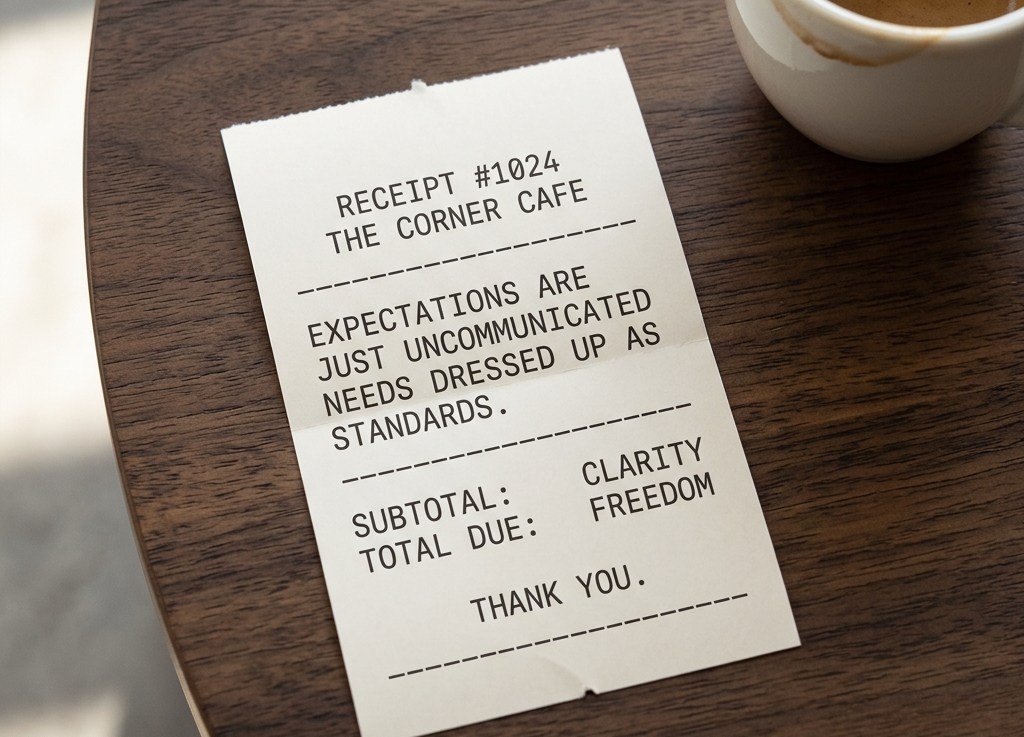
Most of the friction with a Dismissive Avoidant comes from expectations—which are just uncommunicated needs dressed up as standards.
The solution is self-attunement. The clinical term for checking in with yourself so you don’t arrive at the relationship starving.
Think of it like this:
If you arrive at a gas station with a completely empty tank, you’re desperate. If the station is closed, it’s a catastrophe.
But if you self-source your needs—maintaining your own hobbies, friendships, goals—you arrive with a half-full tank. If the partner is temporarily unavailable, it’s an inconvenience. Not a crisis.
This prevents you from approaching a Dismissive Avoidant with the desperation that triggers their fear of being pressured.
The communication pivot:
Dismissive Avoidants often feel interrogated when you ask about their “needs.” The word itself can feel like an accusation.
Replace it.
Instead of: “What do you need from me?”
Try: “What are some things you really like?” or “What makes you feel fulfilled?”
Instead of: “I need consistency.”
Try: “I really love and appreciate when we have consistent check-ins. It makes me feel so connected to you.”
Positive framing isn’t manipulation. It’s translation.
Systems Over Spontaneity: The Structure That Actually Works
Dismissive Avoidants often view connection as “work.” They don’t know how to recharge in the presence of others.
The solution isn’t more spontaneous quality time. It’s structure.
The Friday/Sunday System:
Designate specific times for connection and autonomy.
Friday nights: Dedicated date nights (Connection).
Sunday afternoons: Solo time (Autonomy).
This eliminates the need for constant mind-reading. You’re not negotiating every week. You’ve installed architecture.
The Sincere Needs List:
When showing appreciation, focus on the Dismissive Avoidant’s specific language:
-
Freedom: Acknowledge their autonomy without making it a problem.
-
Sincere acknowledgment: Notice the small acts of service. Taking out the trash. Fixing something. Don’t overlook the quiet contributions.
-
Absence of shaming: They don’t want grand emotional gestures. They want to know their small efforts are seen and that they’re accepted, flaws and all.
Dismissive Avoidants don’t need you to be louder. They need you to be clearer.
From Power Struggle to Bliss: The Path Forward
Moving through the Power Struggle leads to the Stability and Bliss stages. The relationship becomes a reliable foundation for growth instead of a constant negotiation.
The secret to bridging this gap is moving away from covert contracts and toward radical, kindly-stated honesty through positive framing and prefacing.
You’re not fixing them. You’re building a system where both of you can show up without pretending.
Here’s the question I want you to sit with:
Are you currently self-attuning—checking in with your own requirements and communicating them clearly—or are you starving for your own needs while waiting for your partner to mind-read?
Your answer will determine whether you stay in the struggle or move toward bliss.
Because the truth is this: the Dismissive Avoidant isn’t the problem. The lack of structural clarity is.
You can’t negotiate your way into security. You build it. One boundary at a time. One honest conversation at a time. One system at a time.
And if they’re willing to build with you, the relationship you get on the other side isn’t just functional.
It’s coherent.
Discover more from Healing from Narcissistic Abuse, Toxic Relationships & Codependency | Christina Stuller
Subscribe to get the latest posts sent to your email.
